The Making of an Ecosystem
 October 21, 2026


Key Takeaways
- What does it take to build a company that outlives market cycles and business models?
- Sunway’s answer is to think in systems, not sectors, and to build an ecosystem designed to endure.
When you imagine the future, the answers often arrive as personal inventories: the ascent of a career, the hope of building a family, the pursuit of good health and, if fortune allows, the enjoyment of life’s comforts. These dreams are not by any means small. But they are bound by the scale of a single life and shaped by what feels immediately attainable.
More than five decades ago, Tan Sri Dr. Jeffrey Cheah KBE AO stood before a barren mining wasteland he had just purchased for RM100,000, a considerable sum for a young man from a small mining town in Pusing, Perak. In post-independence Malaysia, mining wastelands were common: remnants of a declining colonial economy, widely assumed to be exhausted, unsuitable for growth and best forgotten.
Tan Sri Dr. Jeffrey Cheah did not see it that way.
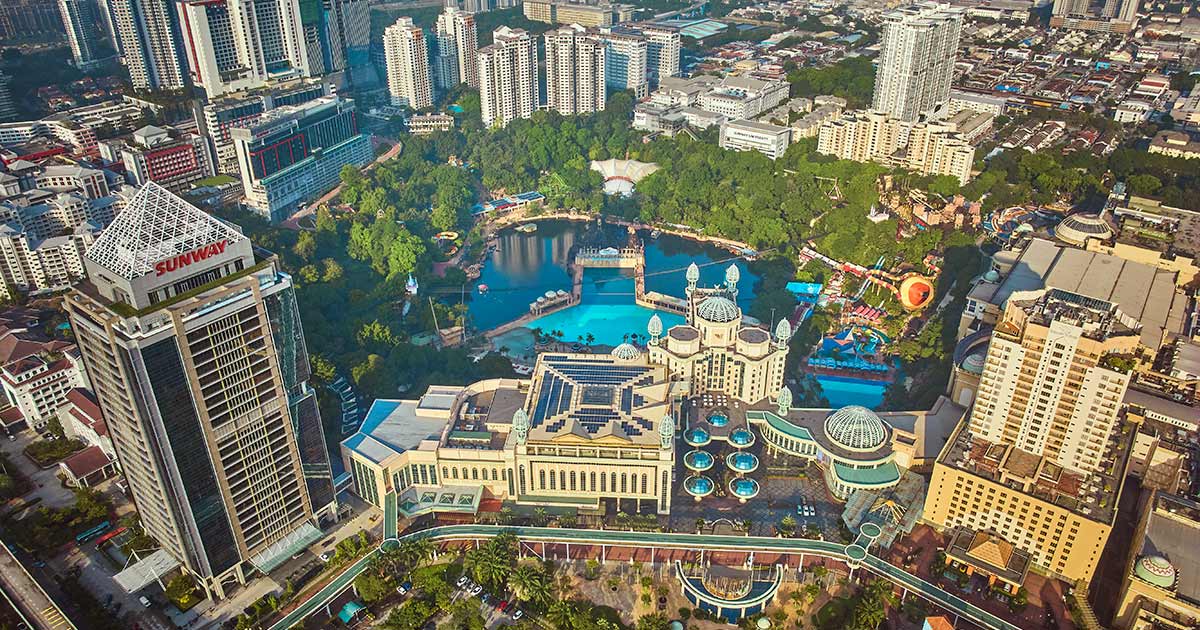
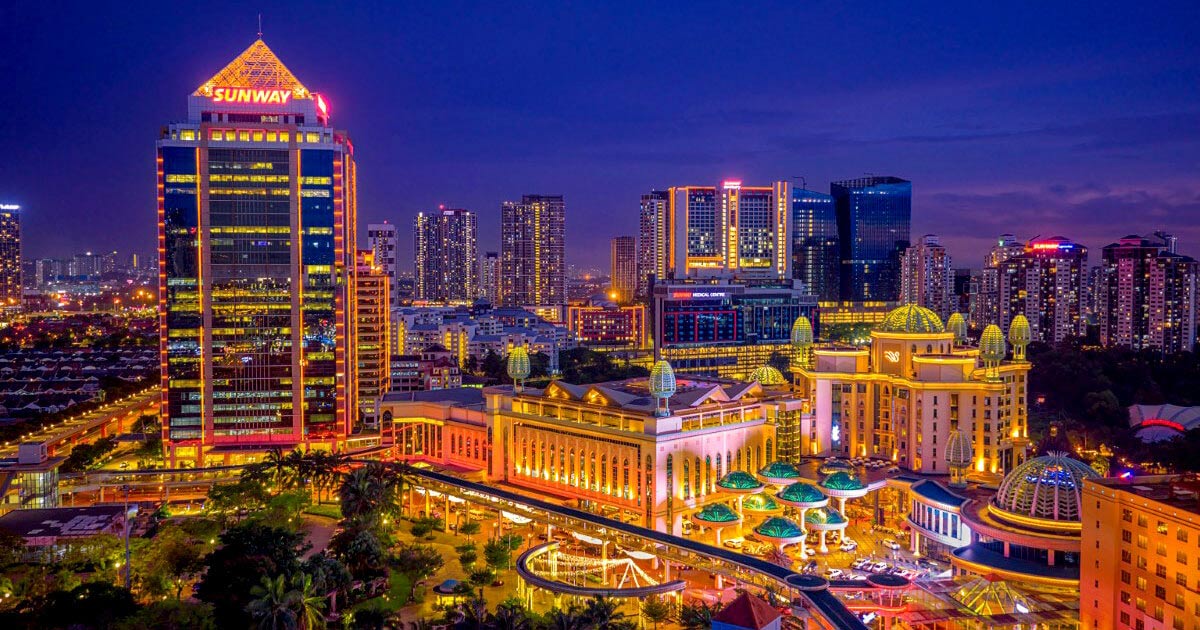
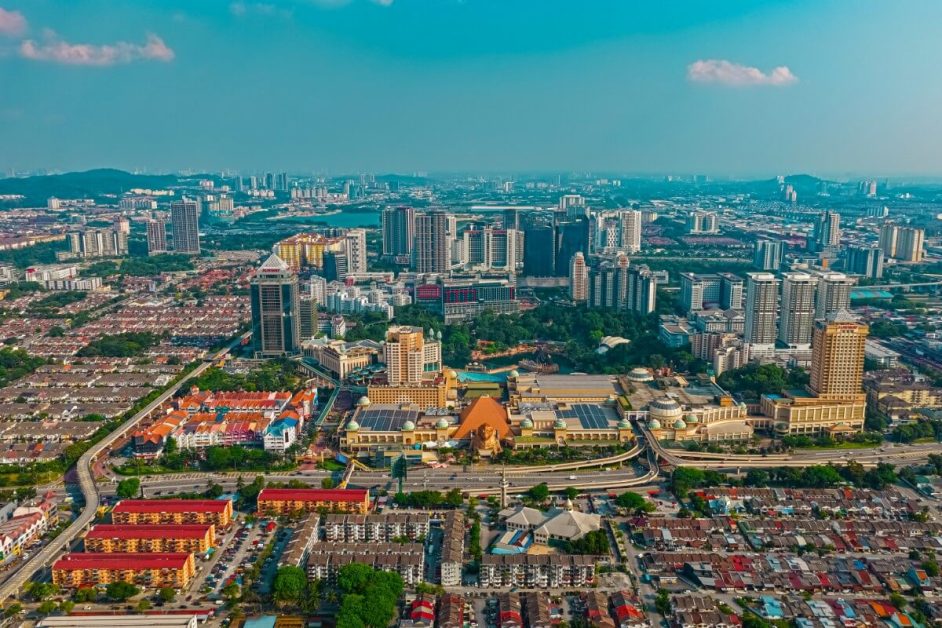
That barren wasteland sparked his dream and vision: what might this become if one were willing to think not in quarters or cycles, but in decades? Today, that wasteland is Sunway City Kuala Lumpur, a living, thriving township and a foundation of a far-reaching ecosystem.
Many look at life through a pinhole, but Tan Sri Dr. Jeffrey Cheah looked through a kaleidoscopic prism and the world he saw was flourishing.
Beyond Business: Building Synergies Across Sunway
A business, in its simplest form, pursues a singular objective. It produces, it sells, it grows, it profits.
An ecosystem is something else entirely. It is not designed merely to sell, but to endure, adapt and evolve alongside the community it serves. Robust ecosystems shape markets, but also respond to shifts in society, technology, demographics and time. More importantly, it recognises that long-term prosperity cannot be extracted from people or land but must be built with them.
Since its founding in 1974, Sunway’s success was never premised on speed and profits alone. Tan Sri Dr. Jeffrey Cheah had the foresight to understand that growing Sunway required patience and deliberation, learning as much from constraint as from ambition. Growth, in this view, was not an act of accumulation for its own sake, but the careful strengthening of a self-sustaining ecosystem in which each business division contributes its capabilities, resources and expertise to reinforce the resilience and success of the whole.
Over the past five decades, Sunway’s evolution followed that logic. Its earliest moves were pragmatic responses to the land itself. The remnants of mining activity naturally led to quarrying and the production of construction aggregates, giving Sunway early control over the very materials required to build what would come next.
From there, the Group extended into construction just as Malaysia’s population grew and urbanisation accelerated. For Sunway, property development emerged as a means of shaping spaces that could sustain businesses and communities over time, as first materialised through Sunway City Kuala Lumpur (SCKL).
As Sunway City Kuala Lumpur took shape and investments grew, the Group adopted a capital-efficient approach, establishing Sunway Real Estate Investment Trust (REIT) that allowed public participation in its assets while freeing capital for reinvestment. Each decision reinforced the next, strengthening a model that was increasingly less about individual businesses and more about the relationships between them.
Underlying this approach is Sunway’s build-own-operate model. Rather than selling assets and moving on, Sunway retains ownership of key enterprises and continues to operate them over time. This long-term stewardship gives Sunway the control to forge deep synergies across the ecosystem while generating stable, recurring income and reducing reliance on cyclical markets.
It also allows innovations and sustainable practices to take root and scale—from water treatment facilities and food waste composting systems to large-scale solar farms—initiatives that are difficult to sustain under short-term development models. By remaining involved as an operator, Sunway ensures all its townships grow in value, strengthening both community resilience and environmental responsibility over time.
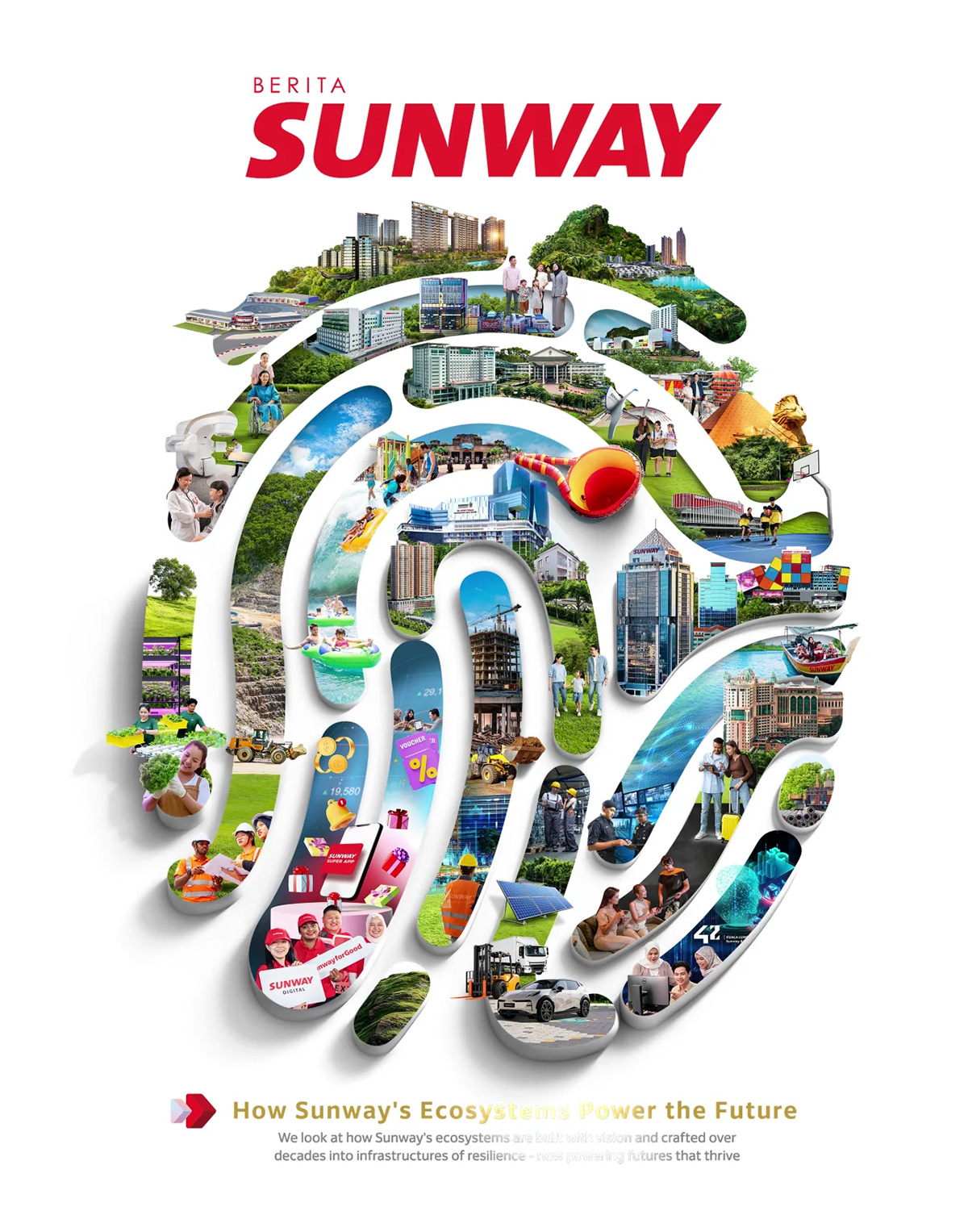
This is what ecosystem building looks like in practice. It is not the accumulation of verticals, but the creation of synergy. Where innovation can be deployed, tested and scaled. People, infrastructure, institutions, capital and culture reinforce one another so solutions emerge not from a single pillar, but from the strength of the whole.
A People-first Approach to City Building
At the centre of this ecosystem has always been the people. Cities do not thrive because of buildings alone. They thrive because they respond to what people value most—often in ways so fundamental; they are easily overlooked. Education, healthcare, homes, connections, wellbeing: these are the conditions that allow life and communities to flourish.
Sunway’s investment in its ecosystem began with education. In 1987, the establishment of Sunway College marked a defining commitment. This was followed by partnerships with leading international universities such as Monash and Lancaster, and later academic and research collaborations with world-class institutions including Cambridge, Oxford and Harvard.
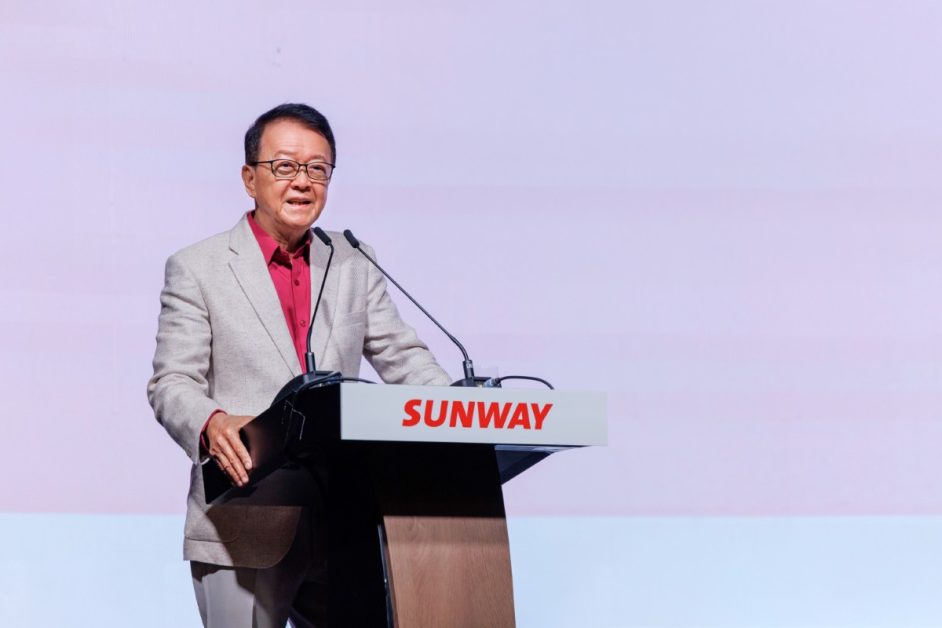
Tan Sri Dr. Jeffrey Cheah has long believed that education is the most powerful pathway out of poverty and misery.
Guided by Confucius’ wisdom — “If your plan is for one year, plant rice. If your plan is for ten years, plant trees. If your plan is for a hundred years, educate children,”
Tan Sri Dr. Jeffrey Cheah saw quality education as the cornerstone to building a thriving ecosystem where communities can grow, and bright minds pave the way to a better world. Determined to make quality education affordable and accessible to as many students as possible, he established the Jeffrey Cheah Foundation with the endowment of his entire equity stake in Sunway Education Group.
Over time, the ecosystem grew into one that draws students from across the world. The Foundation has disbursed more than RM1 billion in scholarships and grants in 2026. This ambition is not merely scale, but excellence: to nurture talent that contributes meaningfully to innovation, economic growth and society at large.
Soon, other pillars followed. In 1992, Sunway Lagoon theme park opened, giving children a reason to persuade their parents to visit and families a reason to stay. Shopping malls, hotels, convention facilities and offices soon emerged—bringing leisure, commerce and daily life into a single, integrated environment.
Healthcare evolved along a similar trajectory. When Sunway opened its first hospital in 1999, it began with 200 beds. Today, Sunway Healthcare Group is Malaysia’s largest private healthcare provider, operating five hospitals with over 2,000 beds, and plans to expand to 10 hospitals with more than 3,800 beds by 2032. This growth culminated in the successful listing of its healthcare arm on Bursa Malaysia in early 2026, in what analysts described as among Malaysia’s largest IPOs in a decade, broadening Sunway’s presence in the public market.
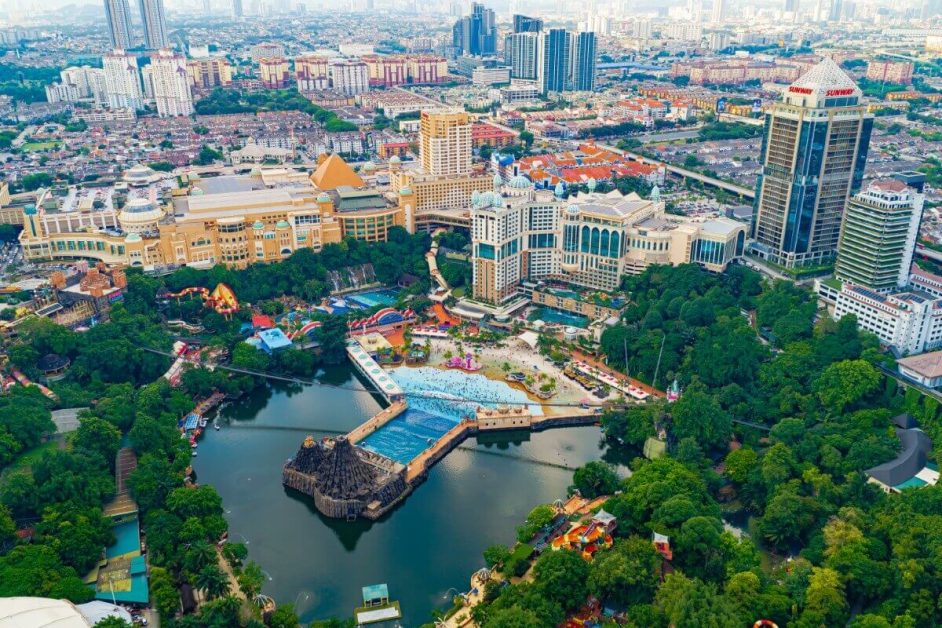
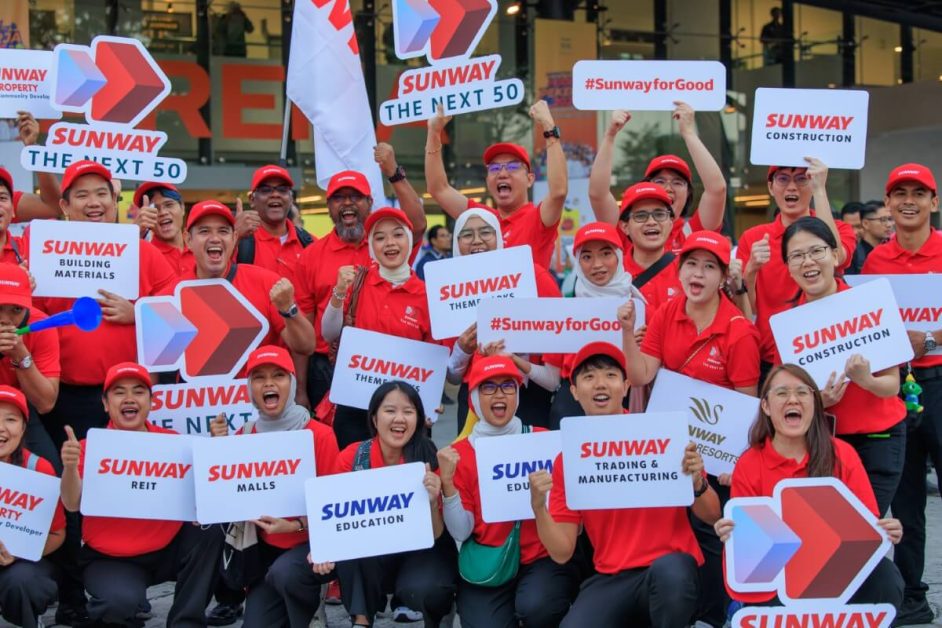
Fifty years on, Sunway now stands among Southeast Asia’s leading conglomerates, with 13 business divisions and more than 20,000 staff spanning real estate, construction, REITs, education, healthcare, retail and hospitality. The combined market capitalisation of its four publicly listed entities—Sunway Berhad, Sunway Construction, Sunway REIT and Sunway Healthcare—now exceeds RM76 billion, reflecting the compounding effect of decisions made with the long view firmly in mind.
Sunway has come to signify more than just a business. It evokes a lived experience and a model of urban life in which hospitals, universities, malls, hotels and homes come together as parts of a larger, thriving ecosystem. This is how ecosystems sustain themselves: through density of purpose, and through relationships that deepen rather than dilute over time.
As Sunway enters its next 50 years, its trajectory extends outward. The blueprint that forged its success in Sunway City Kuala Lumpur is being adapted and scaled across Malaysia and beyond—from Sunway City Ipoh to Sunway City Iskandar Puteri, to Singapore and more—alongside urban renewal and transit-oriented developments that reflect the Group’s distinctive capacity to build and operate complete environments.
As scale increases, Sunway’s values remain unchanged. Integrity continues to guide trust. Humility guards against complacency. Excellence ensures relevance. Business models may evolve, but these principles anchor the ecosystem through change.
From a barren mining site to a living city, Sunway stands as a testament to what becomes possible when ambition is matched with the virtues of strong company values. In this way, the future is imagined not as a goal, but as something continually built for generations upon generations.
If this is what 50 years can produce, imagine what the next 50 can bring.
RELATED SDGs