What Does it Take to Scale an Ecosystem?
 November 23, 2026


Key Takeaways
- What does it truly take to build and scale an ecosystem sustainably? Sunway’s experience offers a clear and tangible answer.
*Information is accurate at the time of writing.
Few organisations set out to build ecosystems. Fewer still succeed.
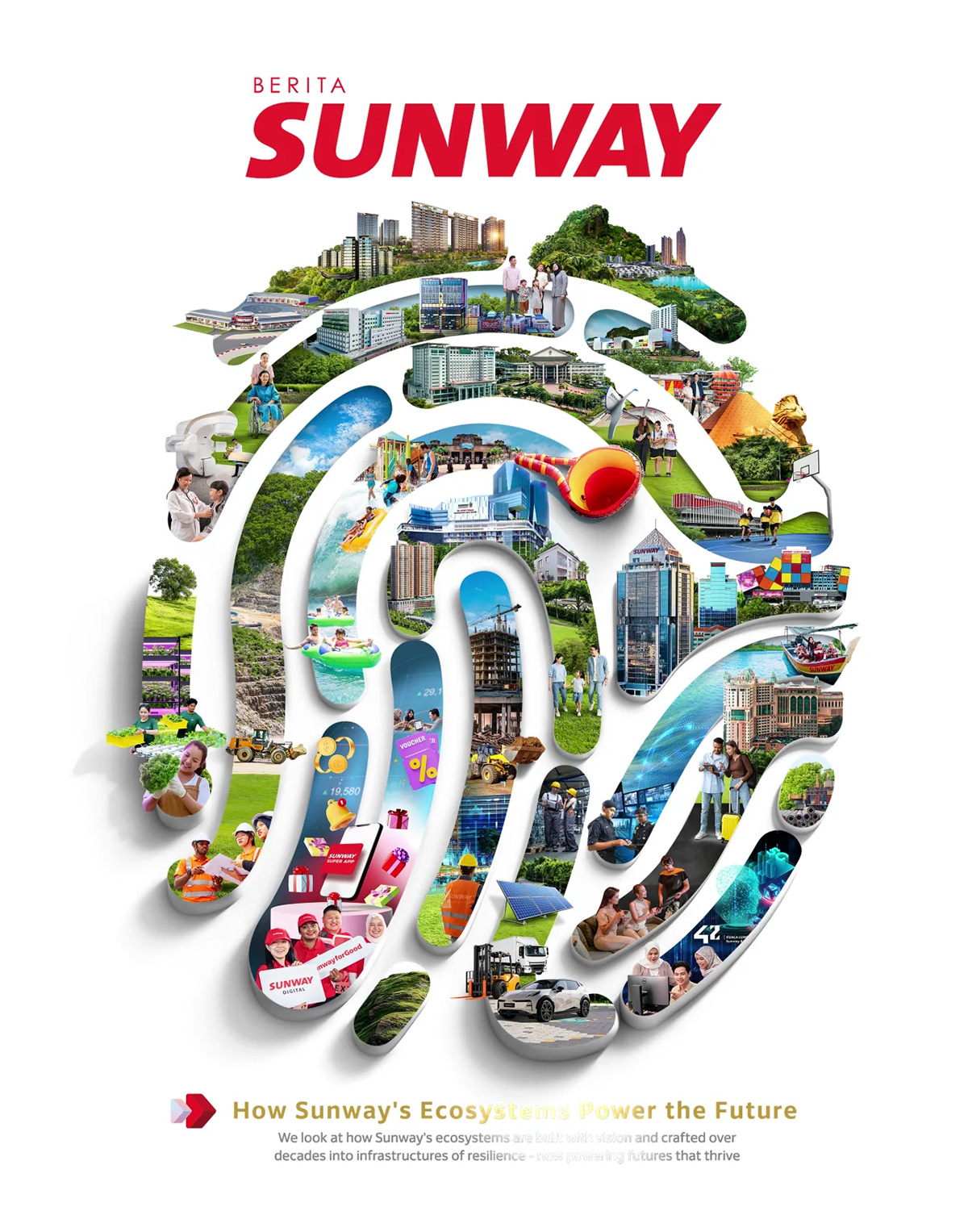
It is not uncommon to see corporate strategy often reduced to portfolio optimisation and short-term returns. Sunway has pursued a different ambition: to build, own and operate integrated environments where businesses, institutions and communities reinforce one another over time. This strategy is not diversification for its own sake, nor scale as the only goal. It is a uniquely curated architecture since the conception of Sunway Group, to treat cities, infrastructure, talent and capital as interdependent systems rather than standalone assets.
The results are visible. In 2025, Sunway Berhad recorded its highest revenue to date, at RM9.8 billion. Its publicly listed entities – Sunway Berhad, Sunway Construction, Sunway REIT and Sunway Healthcare Group – now command a combined market capitalisation of approximately RM76 billion*, representing a fourfold increase in less than five years.
Yet numbers alone do not explain Sunway’s trajectory and mission. To understand how the Group has scaled through economic cycles, one must look beyond individual businesses and examine the underlying principle that binds them together.
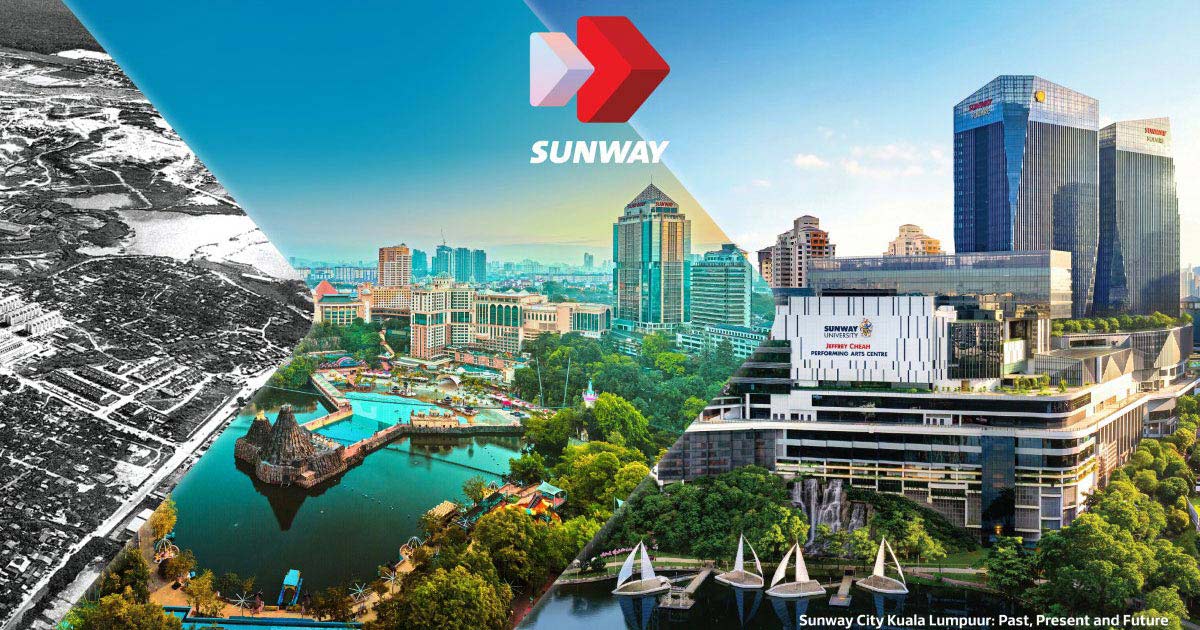
Sunway is best understood not as a conglomerate, but as an ecosystem builder – one that has consistently taken a long view of value creation, beginning with Sunway City Kuala Lumpur as its living prototype.
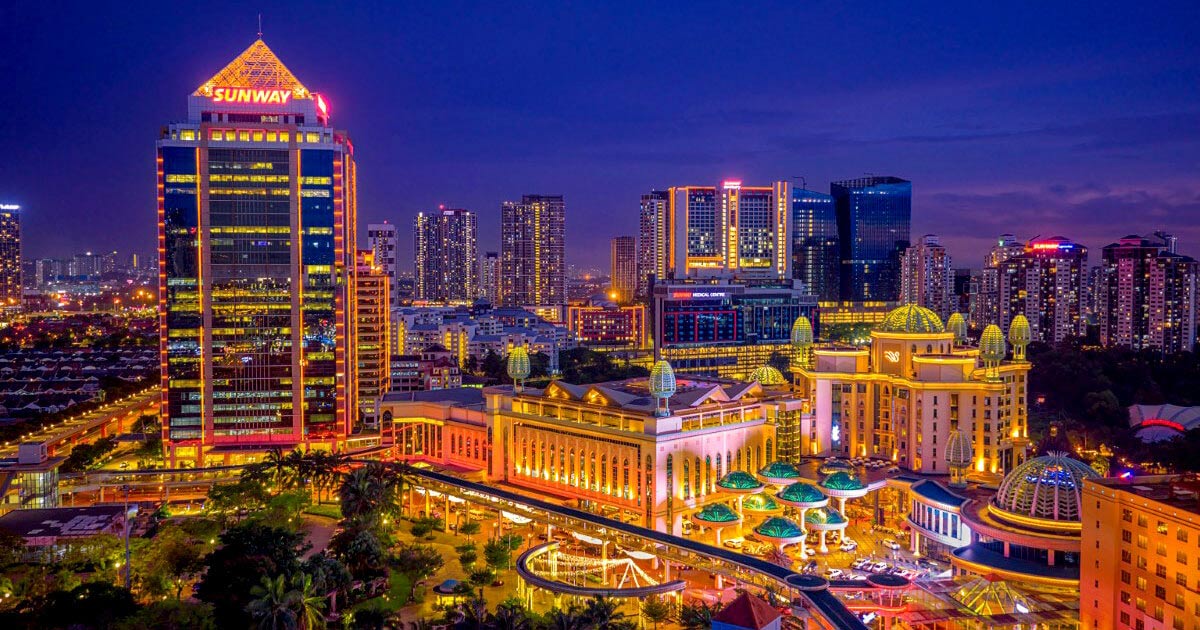
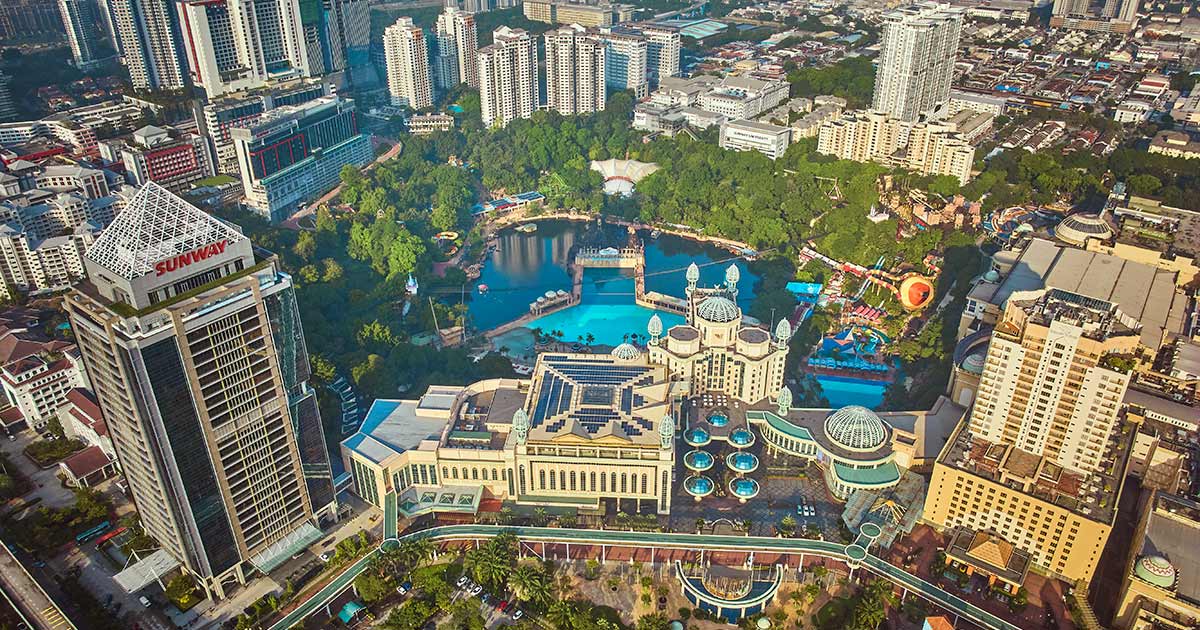
When people speak of Sunway, they rarely reference a single division. They speak instead of a place. A city. An environment where living, learning, working, healing and leisure are designed to coexist and flourish through generations. That instinctive association is not accidental. It is the product of a strategy refined over decades, and one that offers clear lessons on what it truly takes to build and scale an ecosystem sustainably.
From Development to Ecosystem Design
Long before “transit-oriented development” (TOD) entered mainstream planning discourse, Sunway was already building compact, walkable, mixed-use environments anchored around connectivity. Drawing inspiration from cities such as Amsterdam, Copenhagen, Vancouver and Singapore, the Group embraced a planning philosophy that prioritises people over cars, proximity over sprawl and integration over isolation.
In practice, this meant designing retail alongside offices, education alongside healthcare, hospitality alongside culture, all within a seamless and coherent urban fabric. Transit was not an afterthought but the spine of a city. Public space was not residual but central.
This philosophy continues to materialise across Sunway’s townships. Sunway Square, which opened in December 2025, exemplifies this approach. Comprising twin commercial towers housing global enterprises, the project’s significance lies less in its tenants than in its ecosystem capabilities. A 1,200-seat performing arts centre and a 24-hour library sit alongside offices and retail, reinforcing the idea that commerce is strongest when embedded within culture and community. Seamless pedestrian links connect the complex to Sunway hotels, Sunway Medical Centre and Sunway University, forming a tightly integrated urban loop.
What began in Sunway City Kuala Lumpur has since been adapted and scaled across Malaysia, from Sunway City Ipoh to Sunway City Iskandar Puteri. Increasingly, this blueprint is currently expressed at a cross-border scale.
Strategically positioned 5km from the Tuas 2nd Link via the Coastal Highway Southern Link, Sunway City Iskandar Puteri embodies Sunway’s integrated city model within the rapidly evolving Johor–Singapore growth corridor.
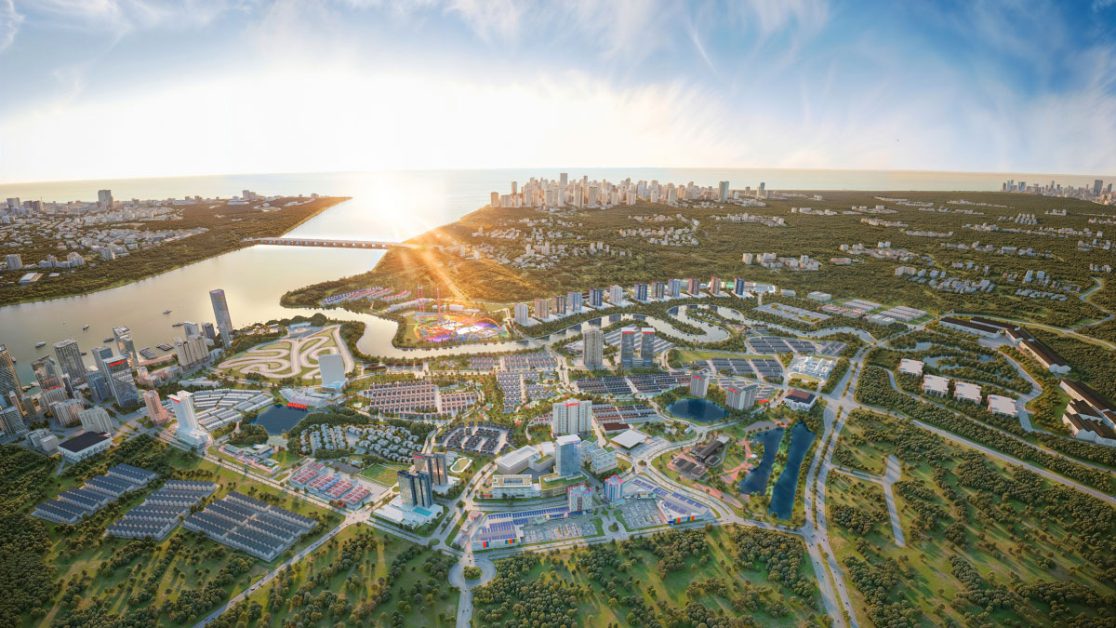
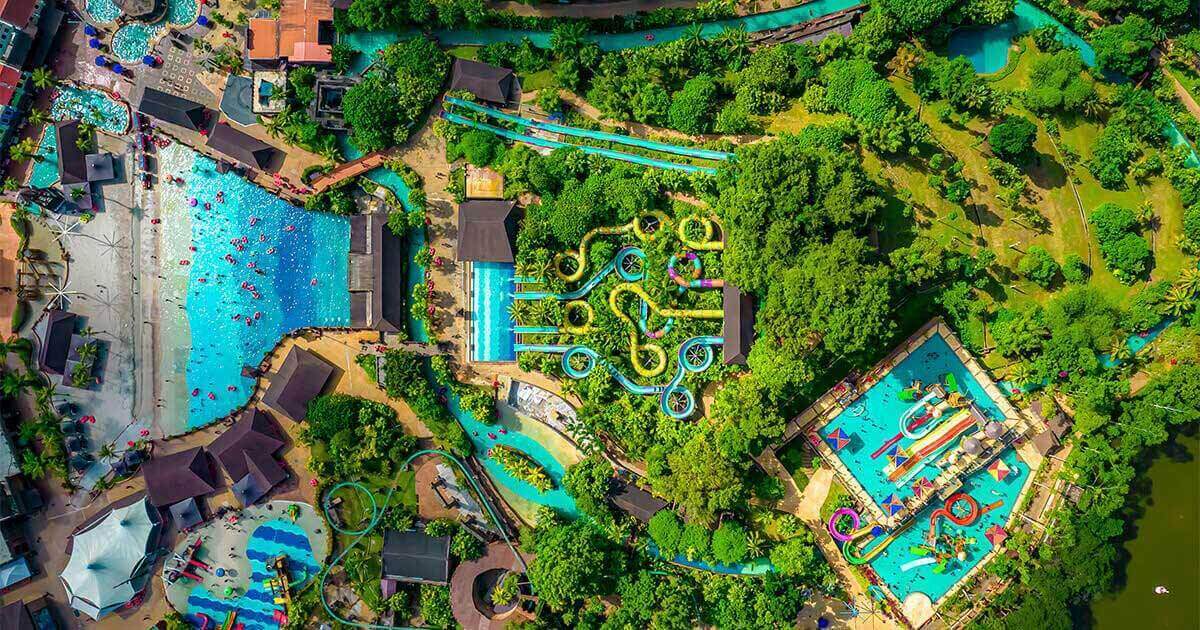
Within this 2,000 acre masterplan, Equalbase Sunway 103°, an RM8 billion free commercial zone developed with Singapore-based Equalbase extends the ecosystem beyond urban living into regional trade and supply chain. With a hospital, senior-care facilities and a theme park coming into the township’s mix, this completes a system designed not just for occupancy, but for economic circulation.
Alongside it, Sunway is now anchored on the Johor-Singapore Causeway with its upcoming Bukit Chagar TOD – a RM2.6 integrated development undertaken with MRT Corp, adjacent to the Rapid Transit System (RTS) Link. Residences, hospitality, retail, healthcare, education and wellness converge with cross-border connectivity, positioning the development as a gateway between two economies.
In Seremban, Sunway is applying the same principles. Seremban Sentral, a RM2 billion mixed-use development located next to the upcoming ETS-linked railway station, is designed to reposition the city as a backend hub for multinational corporations. Lower operating costs, access to talent and direct rail connectivity to the Klang Valley create a compelling alternative to congested urban centres. Here, ecosystem-building becomes a mechanism for decentralised growth, aligning national development priorities with corporate strategy.
Across these projects, Sunway is consistent that it does not build businesses in isolation. It designs with adjacency in mind and creates ecosystems where each component increases the value of the whole.
Domain Knowledge as Strategic Advantage
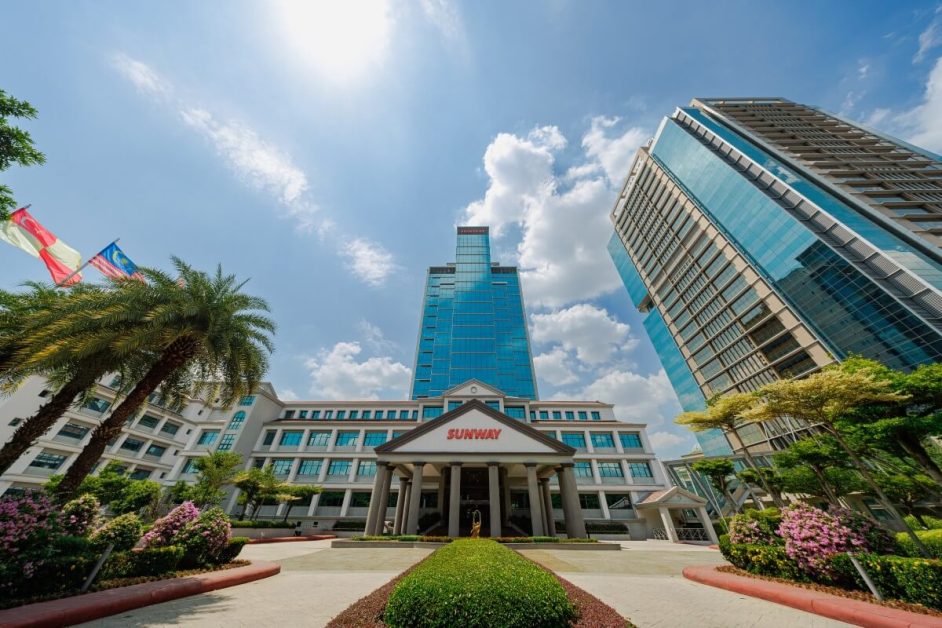
Such a robust ecosystem is only possible when underpinned by deep domain knowledge. And Sunway continues to lead this space.
Sunway’s capabilities span property development, construction, digital infrastructure, education, healthcare, hospitality, financial services and sustainability. This breadth and depth is the outcome of a disciplined Build–Own–Operate model that allows expertise to compound over time.
Townships are planned with construction realities in mind. Digital infrastructure is embedded into physical environments rather than layered on later. Universities are positioned not merely as talent pipelines, but as research engines addressing the very challenges Sunway seeks to solve, from artificial intelligence and data science to sustainability and healthy ageing.
Digital transformation within the Group is pragmatic rather than experimental. Artificial intelligence is deployed to improve claims processing, risk management, sales and customer service. Cybersecurity and digital infrastructure are developed through long-standing partnerships with global technology leaders such as Huawei. Sustainability is treated not as a compliance exercise, but as an organising principle aligned with planetary health and long-term resilience.
The ecosystem works because each part understands the whole.
A Culture of Excellence That Operates at Every Scale
Yet ecosystems do not function on strategy alone. They depend on culture.
Sunway Group President Datuk Anuar Taib observed this early in his tenure. He recalls walking through Sunway Medical Centre Ipoh with Tan Sri Dr. Jeffrey Cheah. In one moment, they were discussing geopolitics and macroeconomic shifts. In the next, Tan Sri Dr. Jeffrey Cheah paused to point out chipped tiles that required attention.
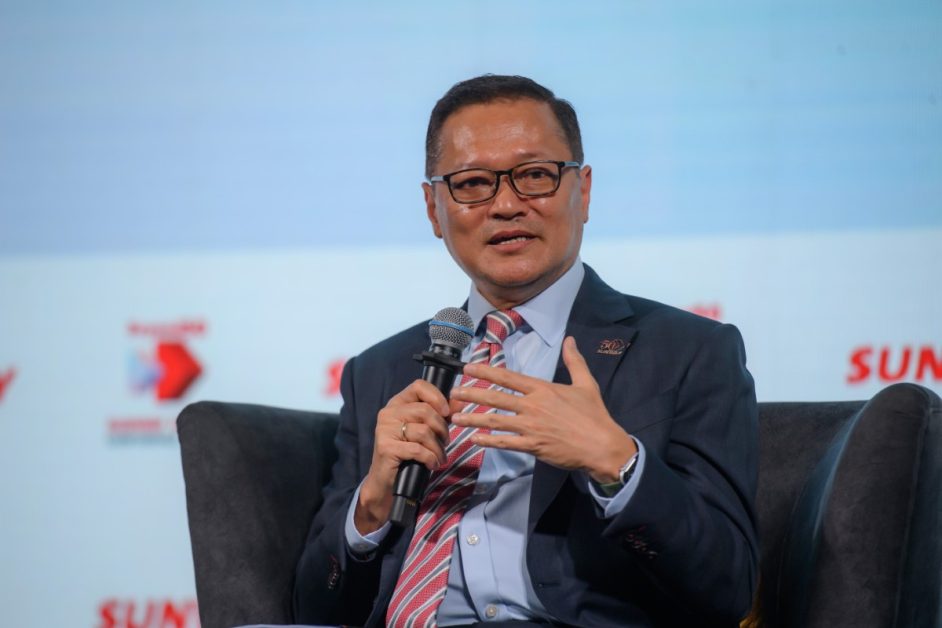
“I have never seen someone who could speak about the largest ideas,” Datuk Anuar reflects, “and then care deeply about the smallest details within the same sentence. That is the culture that we need to emulate and build, because that will be the success recipe for us.”
This duality defines Sunway’s culture of excellence. It is a culture that encourages leaders to think systemically while remaining exacting in execution.
This ethos is institutionalised through structured talent development. Sunway’s Management Associate Programme (MAP) exposes young leaders to multiple business divisions, internal audits, and transformation projects, cultivating strategic thinking and cross-functional fluency. While the Sunway Executive Development Programme for Sustainable Leadership, developed in collaboration with Sunway University, extends this philosophy further, equipping leaders to embed sustainability into decision-making rather than treating it as a parallel agenda.
Integration: Where Ecosystems will Flourish
If domain knowledge and culture provide the foundation, integration determines Sunway’s success.
History offers cautionary examples, says Datuk Anuar. “The Mercedes–Chrysler merger remains a textbook case of what not to do. On paper it looks like a good match of American speed and German engineering, high end and mass market product,” he explains. “The domain knowledge was complementary. But the cultures were different. Germans are a lot more deliberate and process driven. The Americans are a bit more individualistic and fast-moving. To add to this, both companies did not choose to integrate, letting the new entrant run as an island by themselves.”
Sunway has drawn the opposite conclusion. Integration is foundational to robust and resilient growth and scalability.
“The key for us is to integrate,” Datuk Anuar says. “If we look only at individual business units, it is easy for competitors to replicate parts of what we do. But when we integrate, that is where we set ourselves apart. No one brings together all facets of business the way Sunway does.”
“Taking an ecosystem approach requires heads of divisions to come together—to understand what we are good at and how we can integrate with one another,” Datuk Anuar explains. “Sometimes it is the smaller decisions that create the greatest ripple effects. This is not about adding process; it is about embedding a culture where you ask how what you do today enables a colleague in another division to flourish.”
This, ultimately, is the driving force behind Sunway’s ecosystem.
The North Star Forward
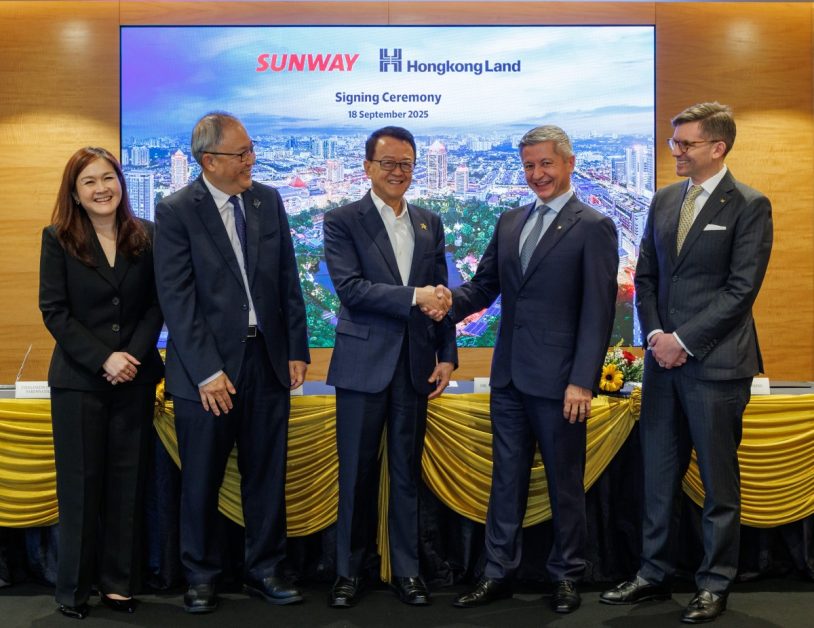
As Sunway continues to expand organically and through mergers and acquisitions—three principles remain: domain knowledge, a culture of excellence and synergistic integration.
This lens guided the acquisition of MCL Land, now Sunway MCL—a RM2.42 billion transaction that added nine ongoing residential projects in Singapore with an attributable gross development value of approximately RM14.9 billion. The acquisition also included Malaysian assets such as development landbanks in Wangsa Maju and Forest Heights in Seremban, as well as Wangsa Walk Mall in Kuala Lumpur.
“In our case with MCL, we saw a business we understood, with domain knowledge we already possess,” Datuk Anuar says. “Datin Paduka Sarena Cheah spoke to many of the staff [at MCL] and found that our cultures are also similar. The task now is integration: ensuring MCL becomes part of the Sunway ecosystem.”
Looking ahead, the same framework will shape Sunway’s exploration of new frontiers, in Malaysia and globally. In doing so, the Group does not ask what to add next. It asks how existing capabilities can be recombined to solve emerging challenges, sustainably. That discipline will be what continues to set Sunway apart for decades to come.
RELATED SDGs